
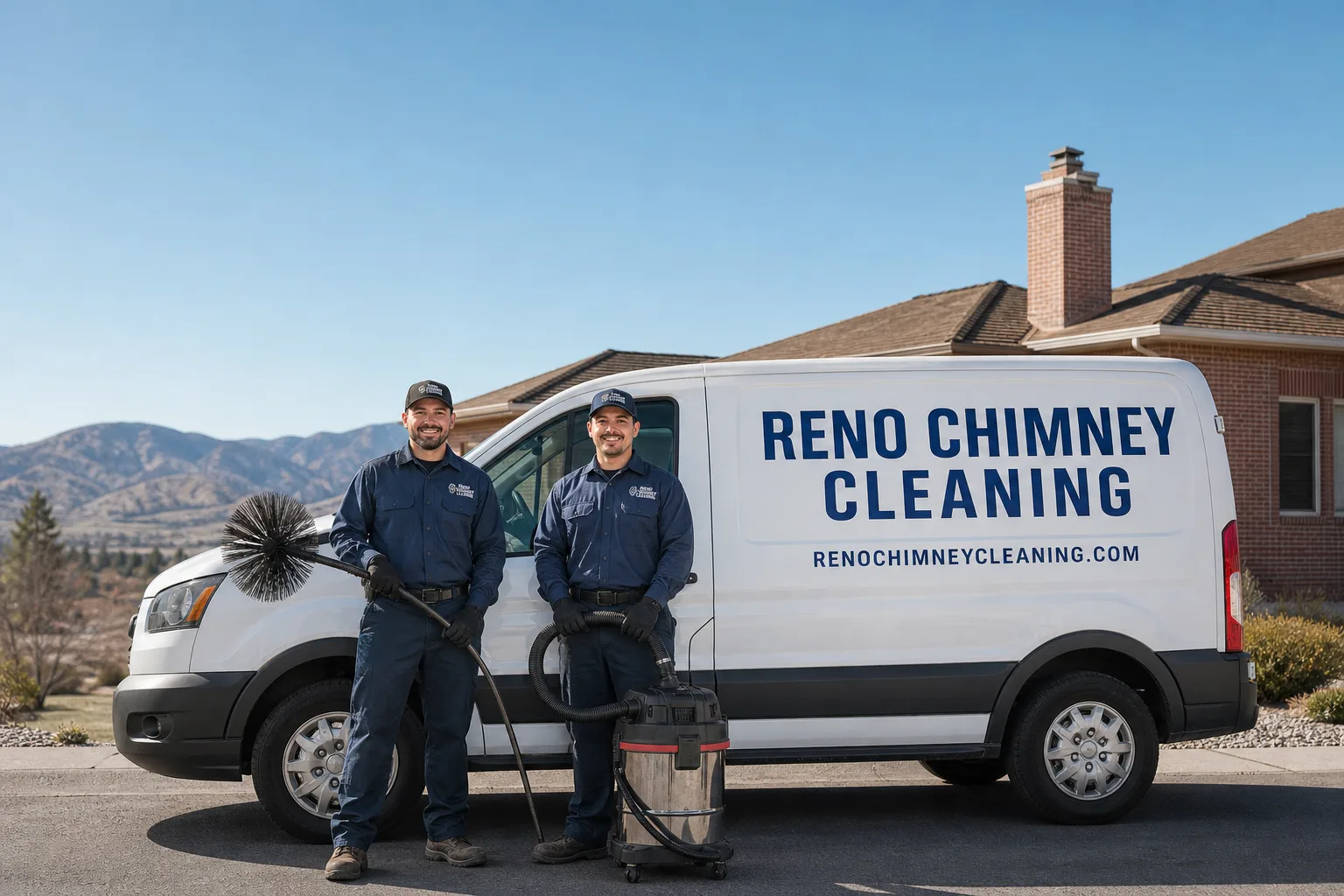
 Sweep & inspection
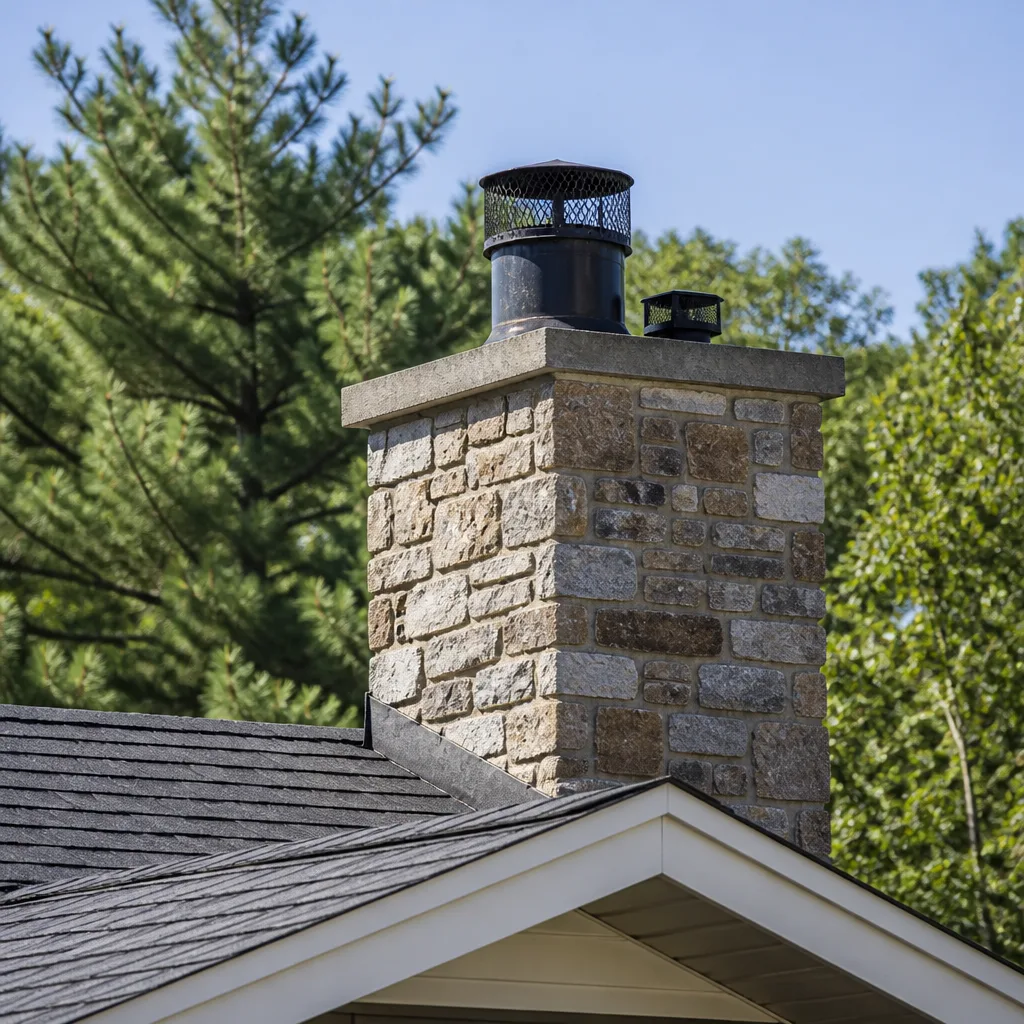
 Caps & crowns
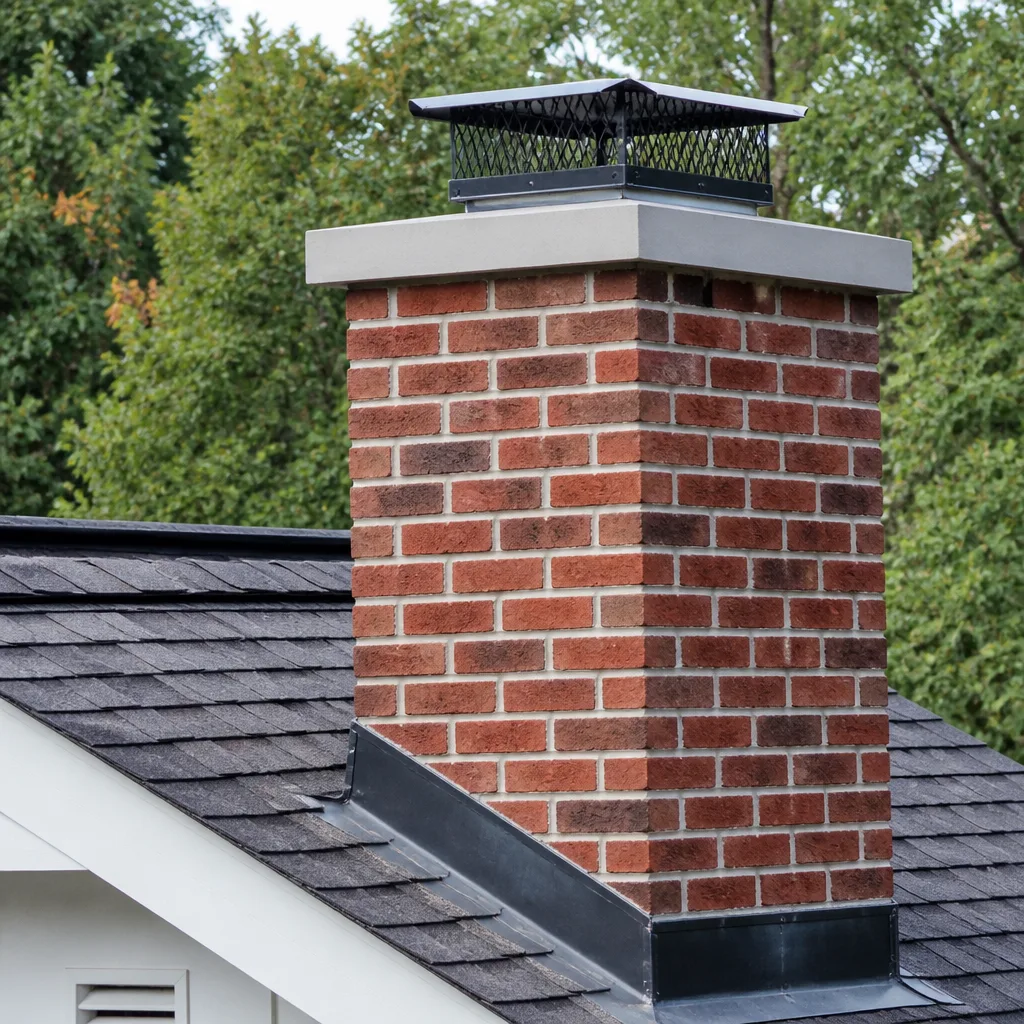
 Flue relining
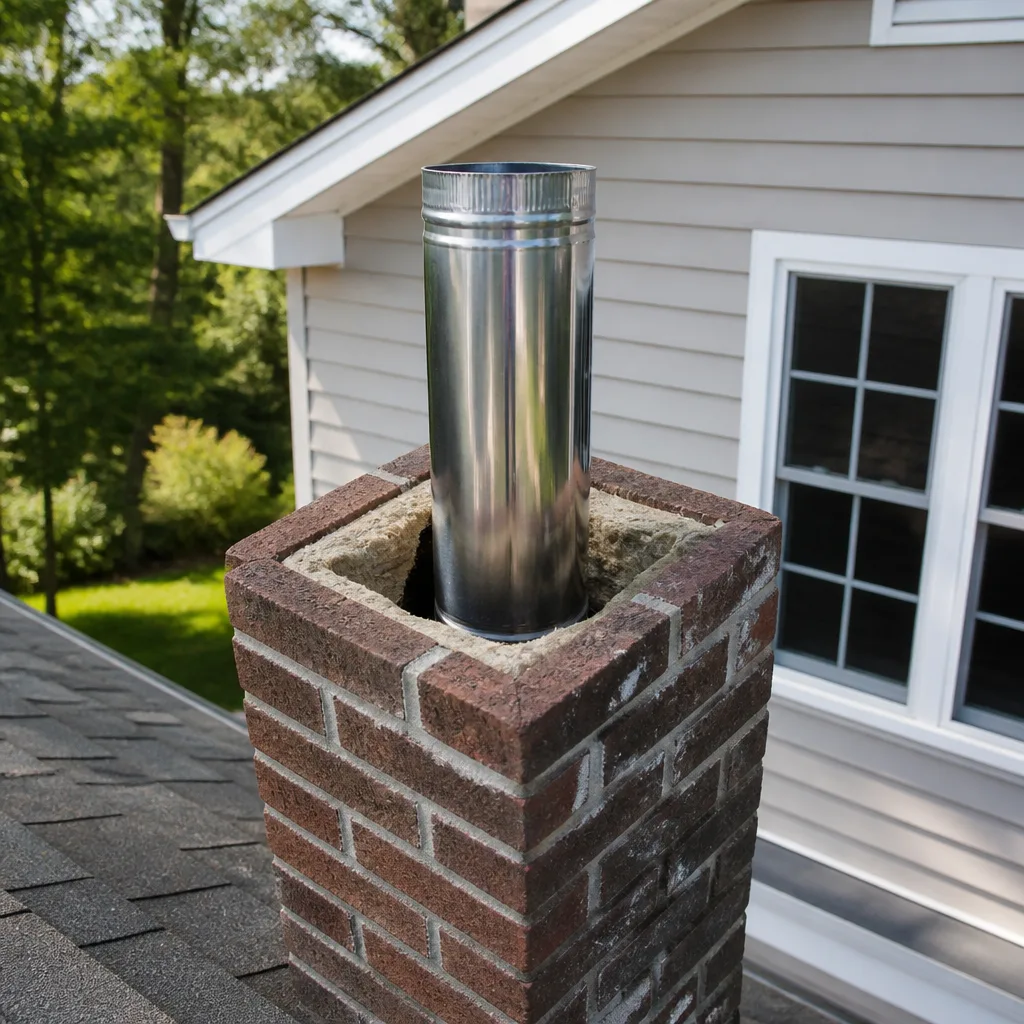
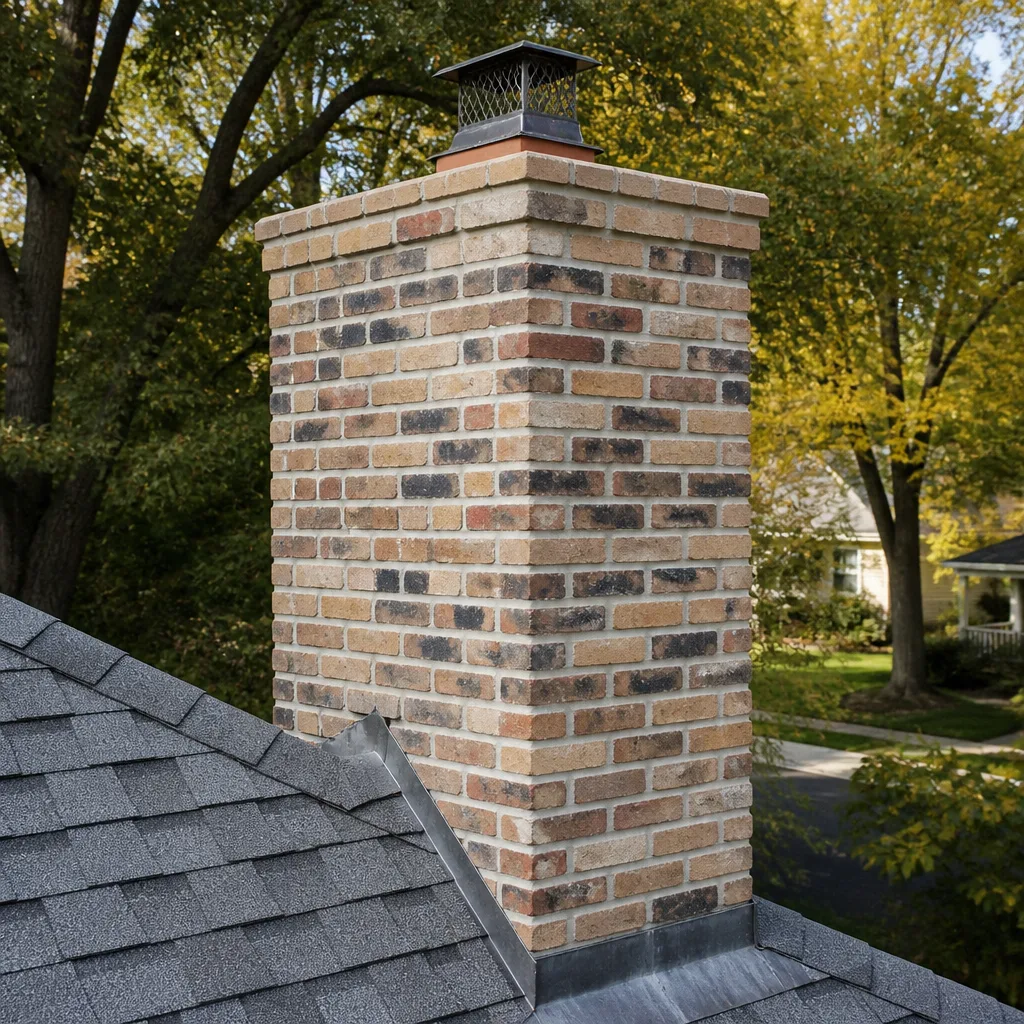 Masonry repair
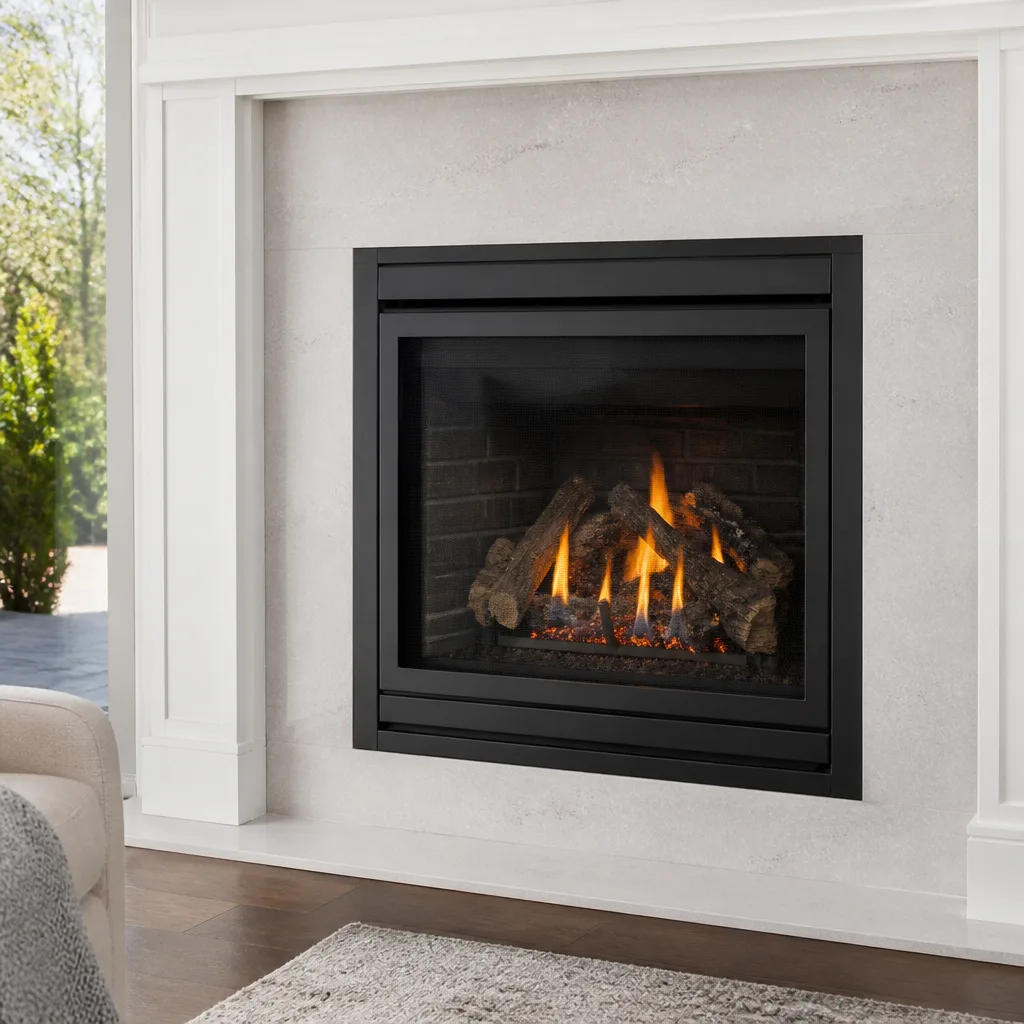 Gas fireplace service
Level 1 sweep and inspection to the NFPA 211 annual standard - flue, crown, cap, and flashing checked and photographed
Chimney sweep logs do not sweep chimneys. They loosen some creosote - which then falls where a brush and vacuum still have to collect it.
Trusted Chimney Inspection for Reno Homeowners
Most chimney problems in Reno announce themselves quietly. A faint smoke smell on a cold Stillwater evening, a bit of creosote flaking off the firebox wall, a water stain on the ceiling after the first big snowmelt. By the time you notice a real symptom, the damage has usually been building for a season or two. That’s what an inspection is for – finding it before it becomes a rebuild. Our technicians have up to 10 years of experience inspecting chimney systems from crown to liner, and we use the professional-grade materials from HeatShield, DuraFlex, and Olympia Chimney to match any repair to the right solution. Call (844) 543-7293 to book. We answer 24/7.
Fireplace Inspection
Fireplace Inspection is the close look at the part of the system you actually use – firebox, damper, smoke chamber, hearth, and the visible flue above it. You need it when you’ve been putting off a sweep, when you’re buying a home in Reno with a fireplace you’ve never burned, or after a season where a fire drafted poorly, smoked into the room, or smelled off. Our written report names what’s wrong and what isn’t, and you decide what to do next.
What We Check and Why
We look at the firebox walls for cracks that can let heat escape into the structure, the damper for a seal that actually closes, and the smoke chamber for the ragged edges that collect creosote. A clogged or oversized smoke chamber is one of the most common reasons a fireplace smokes into the house, and it’s something we can see during the visit rather than guess at. All findings come with photos.
Gas Fireplaces and Inserts
Gas fireplaces and inserts need an inspection too, even though they don’t produce creosote the way wood does. We check the vent path, look for debris or bird nests blocking the flue, and inspect the firebox and log set area for signs of incomplete combustion or moisture. A gas unit that has been dormant is worth looking at before you light it again.
Styles & brands we work with
- Sweep & inspection
- Caps & crowns
- Flue relining
- Masonry repair
- Gas fireplace service
Chimney Inspection Services
Chimney Inspection Services are the full evaluation of your system, and we offer all three levels depending on what you need. You need one when you buy or sell a home in Reno, when you’ve had a chimney fire or a lightning strike nearby, when the liner age is unknown, or when you’re changing fuel types. We inspect before we recommend, and we match any repair to the right HeatShield, DuraFlex, or Olympia Chimney product rather than a one-size-fits-all fix. Call for a written estimate on your visit.
Levels and What Each Covers
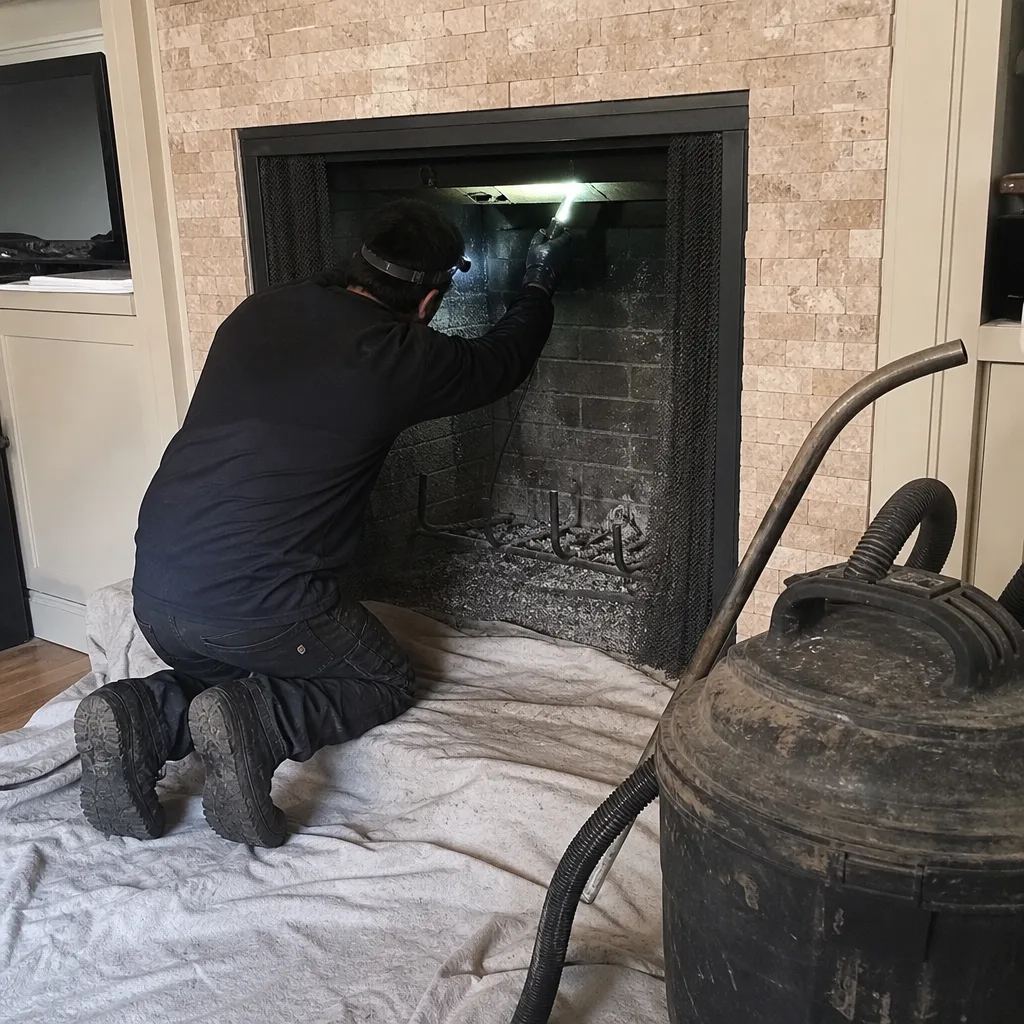
A basic visual check covers what’s reachable without special tools. A Level 2 adds a camera run of the flue and a look at accessible portions of the chimney, and it’s the level most real estate transactions and post-fire situations call for. A Level 3 is for when we need to open up part of the structure to see something the camera can’t reach.
What You Get in Writing
Every inspection produces a written report that lists the defects we found, what they mean for your safety and performance, and an estimated cost to fix each one. You’ll see the photos we based our recommendations on. Nothing gets added to the report unless we can point to the evidence behind it.
Chimney Flue Inspection
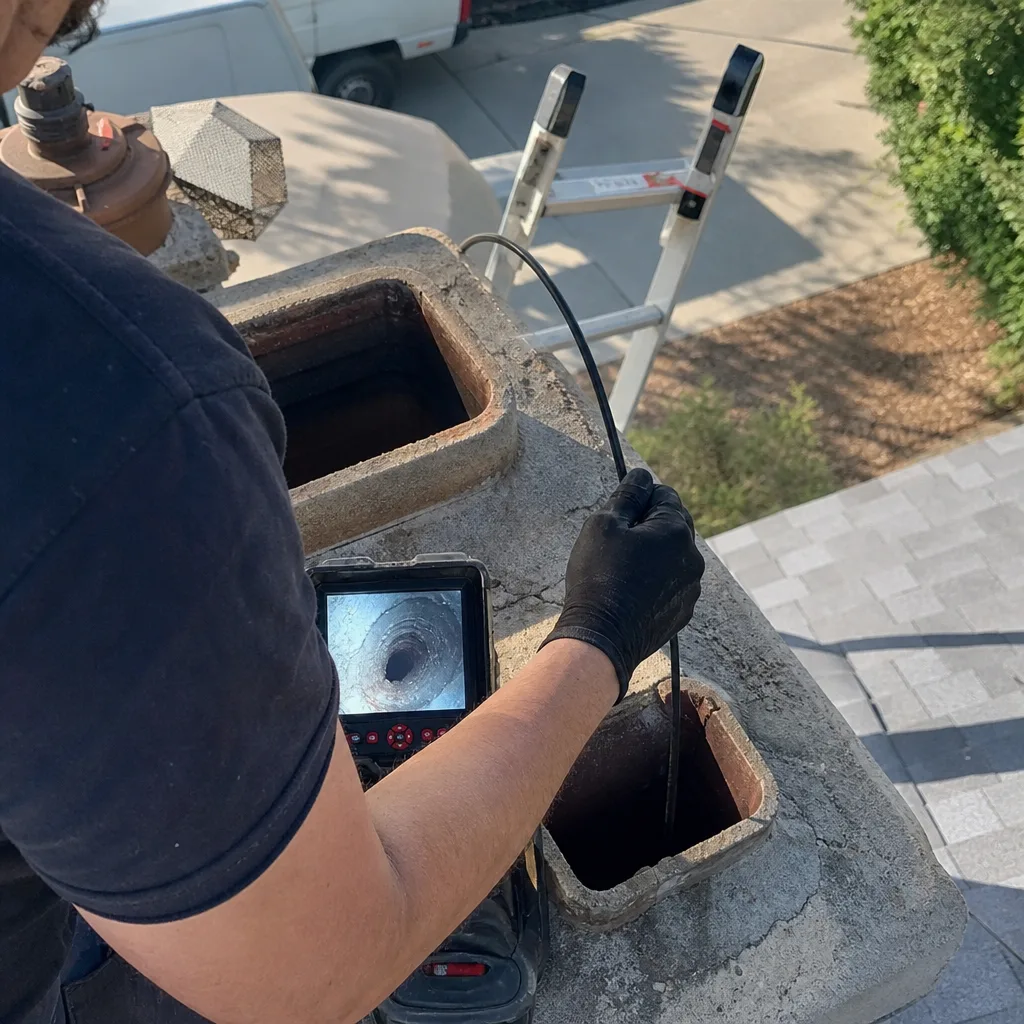
Chimney Flue Inspection is the inside look at the passage the smoke travels through, from the top of the liner down to the firebox connection. You need it any time a flue has never been checked, after a chimney fire, when the appliance changed, or when you’re noticing draft problems or a smell that doesn’t match the fire you’re burning. A flue is the safety barrier between your fire and the framing of your house, and it’s the first thing we look at.
Liner Condition and Clearances
We check the liner for cracks, gaps, spalling, and separation at the joints, and we measure the clearance to combustible material where we can see it. A liner with a gap in it lets heat and carbon monoxide reach places they shouldn’t. Clay tile liners that have cracked from a fire or a freeze are a common find in older Reno homes.
Draft and Smoke Testing
A flue that doesn’t pull correctly will smoke into the room no matter how clean it is. We test draft with the appliance running where possible and check for blockages, undersized flues, and the pressure problems that come from a tight house. That tells us whether the issue is the flue itself or the way the appliance is venting into it.
Chimney Fire
Chimney Fire is a burn inside the flue itself, fed by creosote that has built up on the liner walls, and it can burn hot enough to crack tile, warp a metal liner, and damage the chimney structure. You need an inspection after any suspected fire, and you need one before the next heating season if you’ve been burning a lot of wood without a sweep. Even a small fire leaves a signature on the liner that a camera catches.
What a Fire Leaves Behind
Creosote that ignites can do visible damage like cracked tiles, warped metal, or a shattered crown. The damage we look hardest for is at the flue transition and the top of the liner, where heat concentrates. A fire that “went out on its own” is not a fire that left no trace, and the trace matters.
When the Liner Has to Be Relined
If a fire has opened gaps in the liner, the fix is a reline, not a patch. We use DuraFlex and Olympia Chimney liner systems for full relining, and HeatShield resurfacing where the existing liner can be restored rather than replaced. The report will tell you which applies to your chimney and why.
Level 2 Chimney Inspection
Level 2 Chimney Inspection is the standard for real estate transactions, for properties that have had a chimney fire, for newly installed appliances, and for any chimney you haven’t had evaluated before. It includes everything a basic level-one visual check covers plus a camera run of the flue and inspection of accessible portions of the chimney exterior, attic, and crawl space. Our technicians have up to 10 years of experience running cameras and reading what they see.
When It’s Required
Most home sales involving a wood-burning appliance call for a Level 2, and lenders and insurers often ask for one before they’ll write or renew a policy on a house with a fireplace. If you’ve changed fuel type or replaced an appliance, that’s another trigger. The report gives you the documentation those parties want.
What Gets Documented
The report covers the flue interior from top to bottom, the firebox, the damper, the crown and cap, and the parts of the exterior chimney we can reach. You’ll see photos of the defects, whether each one is a safety issue or a maintenance item, and what a repair will involve. It’s written so a buyer, a seller, or an insurer can read it without a translator.
Chimney Leak
Chimney Leak is water getting into the chimney or the house through the crown, the flashing at the roof line, the cap, or a cracked liner, and Reno’s freeze-thaw swings are hard on all of it. You need it looked at when you see a ceiling or wall stain near the chimney, rust on the damper or firebox, a musty smell in summer, or efflorescence on the brick. Water and masonry don’t coexist quietly for long.
Tracing the Source
Leaks often enter at the top and show up at the bottom, which makes guesswork expensive. We inspect the crown for cracks, the flashing for lifted or missing sections, and the cap for missing screening or loose parts. We use Gelco and Famco cap and ventilation products to fix the openings we find. A leaking cap or crown is a straightforward repair, not a rebuild.
What It Costs to Fix
Repair pricing depends entirely on the source. Crown and cap repairs and flashing repairs are the more modest end, and a liner replacement or partial rebuild is the higher end. The inspection report itemizes every source we find and what fixing each one costs, and the written estimate is what you pay. No surprises after the work starts.
Chimney Camera Inspection
Chimney Camera Inspection is a video run through the entire flue, recorded for you to see, so the liner’s real condition is documented rather than guessed at. You need it any time a sweep finds something suspicious, when you’re buying a home with an unknown chimney history, after a fire, or when an inspection at the top shows the crown is failing. It’s the tool that decides whether a repair recommendation is justified.
What the Camera Shows
The camera sees cracks in the liner, gaps at the joints, spalling, missing mortar, and obstructions like nests or a collapsed tile. It also shows the condition of the smoke chamber and the transition from the firebox up into the flue. All of it recorded, all of it yours to keep.
Records You Keep
We hand you the video and the still frames from the report, so you have a record of what the chimney looked like on the day we visited. That’s useful for an insurer, a home sale, or for comparing a future inspection. If someone tells you the liner needs a full replacement, the video will show you why, or it won’t.
Brands We Service
We work with a curated roster of professional-grade brands, and we know where each one wears out. We service Gelco and Famco cap and ventilation products, and those two cover most of what we find at the top of a chimney in Reno – cracked caps, missing screening, dampers that no longer seal. We use HeatShield for liner resurfacing where the existing liner can be restored, and DuraFlex and Olympia Chimney for full relining where a new liner is the right answer.
The value of working with those brands is that the repair isn’t one-size-fits-all. A crack in a clay tile, a section of a metal liner that has warped, and a crown that’s failing are three different problems and get three different solutions. Whether you have a Gelco cap, a Famco damper, or any other make, we can help. If your chimney has no known brand on it, we’ll still tell you what it is and what it needs.
See the difference
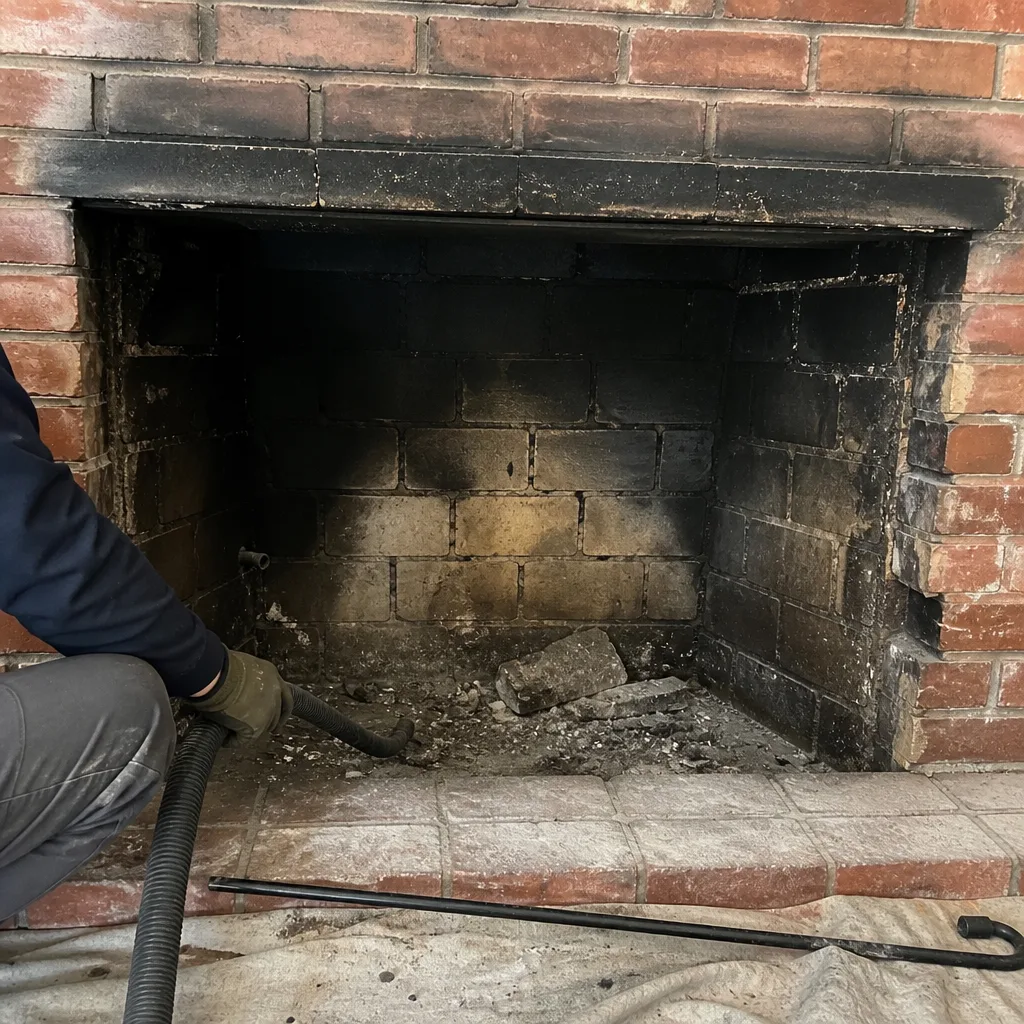 Before
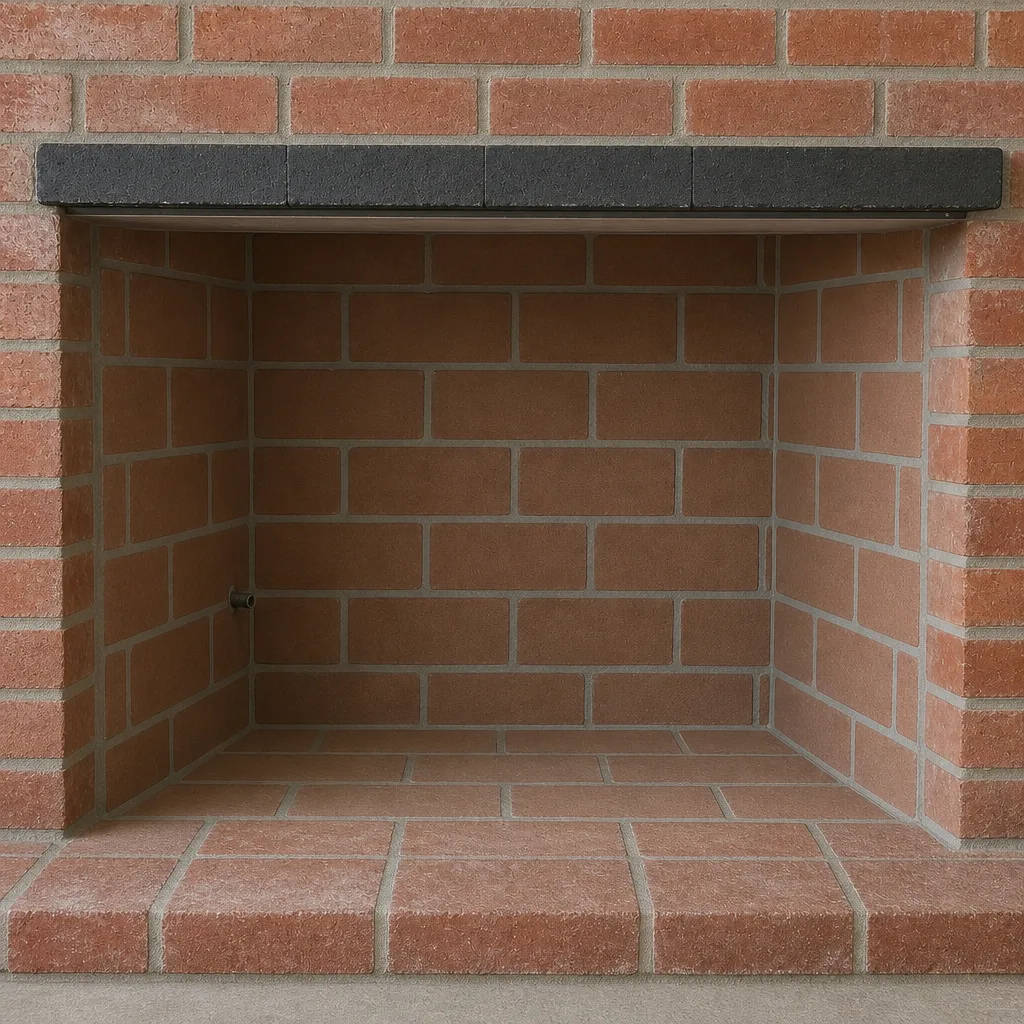 After
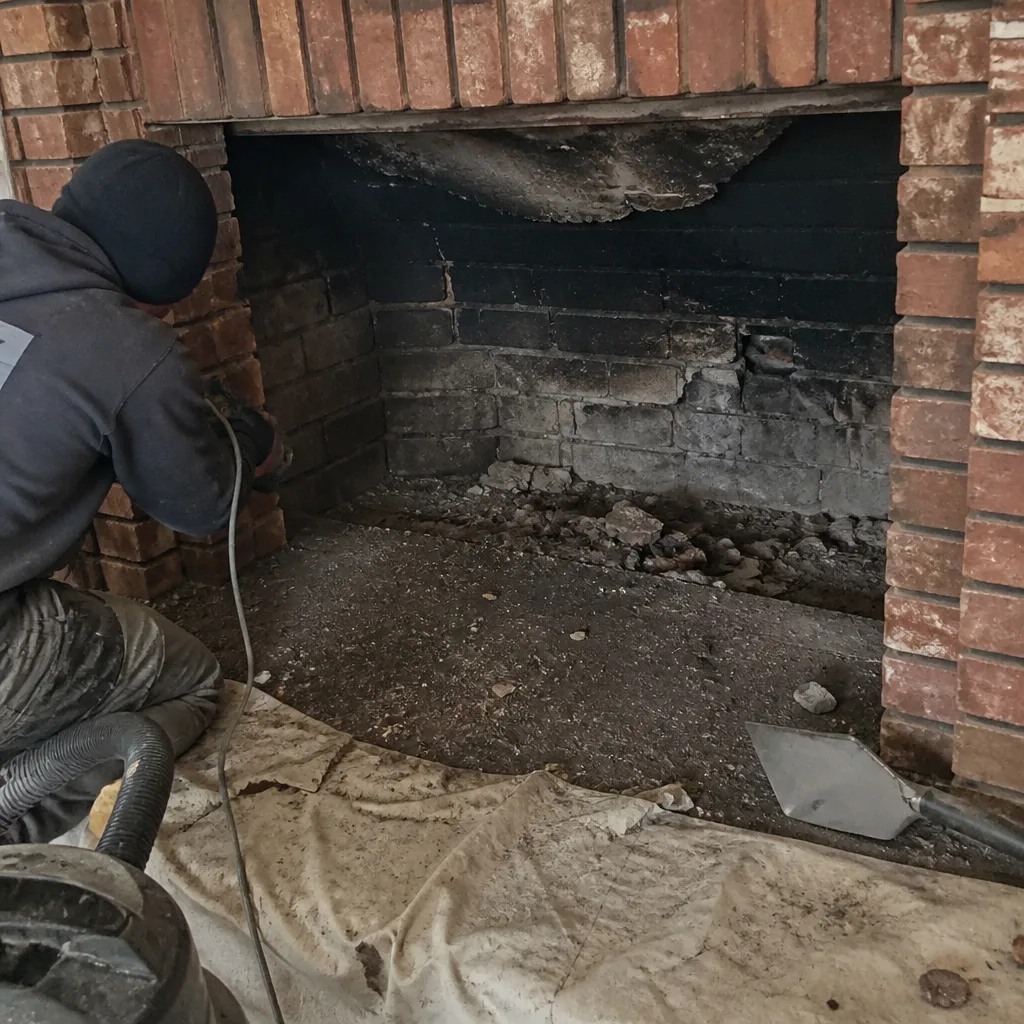 Before
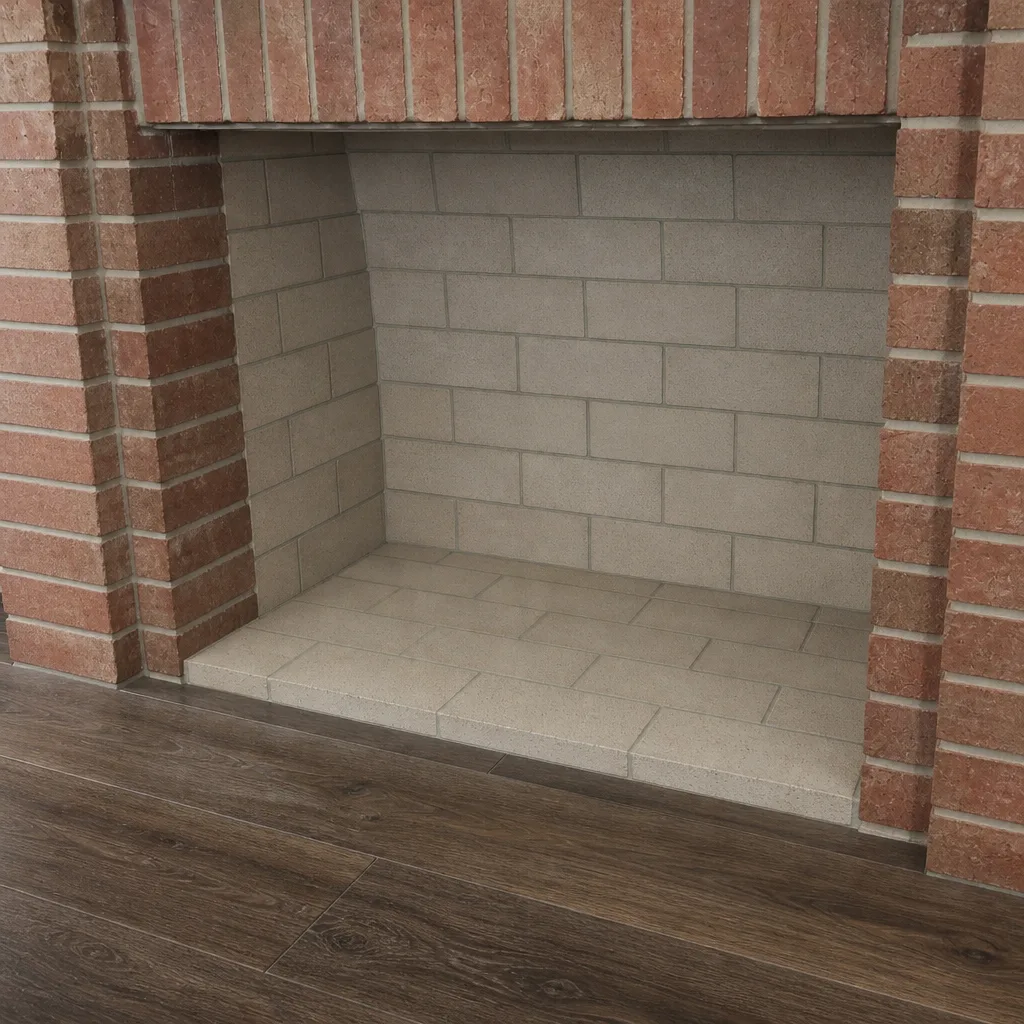 After
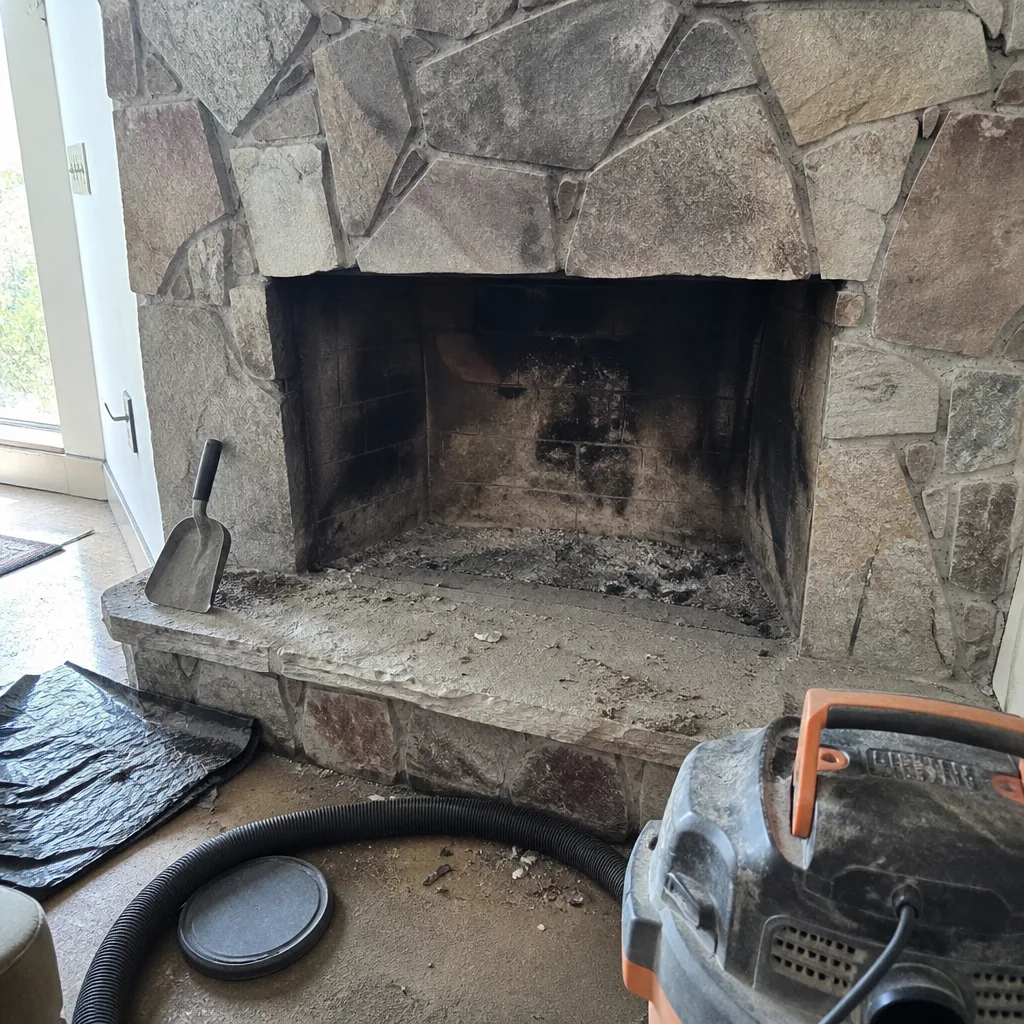 Before
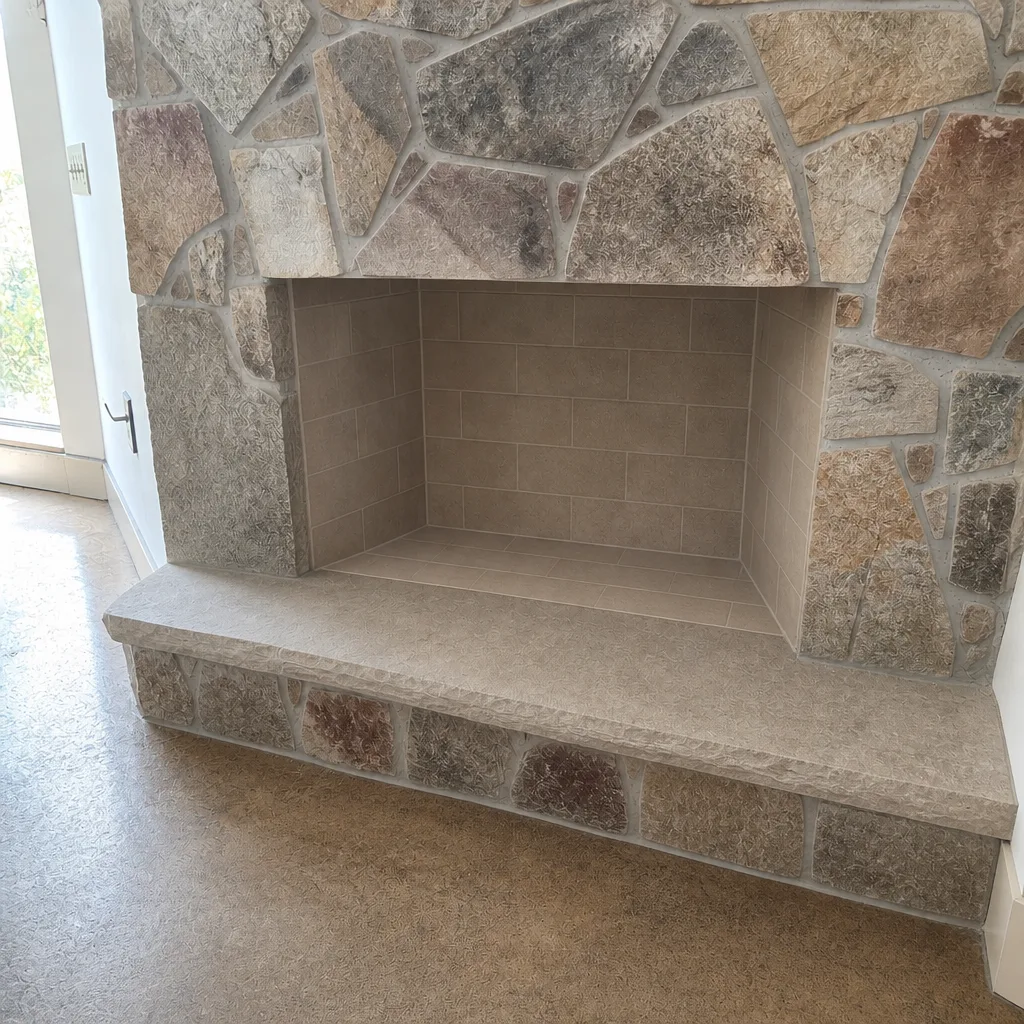 After
Signs You Need a Pro Right Now
Most of these are not emergencies, but each one is telling you something has changed. If any of them shows up, call us and we’ll book an inspection before the next burn.
- Strong smoky smell in the house on warm days. That smell comes from creosote and soot that the chimney can’t vent when the house is warm and the flue is cold. It’s a sign the flue is loaded with flammable material and needs a sweep before the next season, not just an air freshener.
- Visible creosote on the firebox walls. When you can see a crusty buildup on the inside of the firebox or above the damper, the flue above it likely has more. Creosote in the flue is what feeds a chimney fire, and it accumulates in stages that a sweep can remove.
- Water stains or a musty smell near the chimney. Ceiling or wall stains near the chimney, or a smell in the house in summer, usually trace back to a leak at the crown, cap, or flashing. Water damage in masonry gets worse with every freeze-thaw cycle, so it’s worth checking early.
- Smoke in the room when you burn. A fireplace that smokes into the house is telling you the flue isn’t pulling correctly – a blockage, an undersized flue, or a smoke chamber issue. A camera inspection finds out which, and most of the causes are fixable.
- A burned smell that isn’t the wood you’re burning. A hot or acrid smell, or blackened creosote that looks shiny and puffy, can indicate a fire in the flue has already happened. Stop burning until we’ve inspected, and do not light a fire to “see what happens.”
Our Process, Step by Step
We inspect before we recommend, and we show you the evidence behind every recommendation. Here’s how the visit runs.
- 1
We talk through the symptoms. Before we climb anything, we ask what you’ve noticed – smoke, smell, water, draft, noise – and what fuel you burn. That shapes where we look hardest and which parts of the system we test. We book the visit and confirm what’s covered in the estimate.
- 2
We sweep if needed. If the firebox and flue haven’t been cleaned, we sweep first, because soot hides the liner surface and skews the camera view. A clean flue means the camera sees cracks and gaps instead of holes you can’t distinguish from soot. Sweeping and inspection are done by the same company, so there’s no coordination on your side.
- 3
We run a camera down the flue. The camera records the whole liner, from the crown down to the smoke chamber and firebox connection, and we save the footage. We inspect the exterior, crown, cap, and flashing where accessible, and the attic or crawl space where the chimney passes through. Photos back up every finding.
- 4
We test draft and clearances. We test draft with the appliance running where possible, and check clearances to combustibles at the points we can see. That’s how we tell the difference between a flue problem and a draft problem, which are fixed differently.
- 5
We write up the report and the estimate. You get the photos, the video, and a written report that separates safety issues from maintenance items, with the cost to fix each one. The written estimate sets the final price, and if some of it can safely wait, we tell you so.
How Much Does Chimney Inspection Cost in Reno?
A typical inspection in Reno runs $100-$250 for a basic visual check, $150-$350 for a Level 2 with camera, and a full reline runs $2,500-$6,500 depending on length, liner type, and whether the crown and cap are part of the job. The lower end covers a straightforward flue with an accessible crown and cap; the higher end is a longer flue, a metal liner replacement, or one where the crown needs repair first. A camera run adds cost over a visual check because everything gets recorded and written up, and that’s the record that lets you verify a repair is needed.
What moves the price: flue length and number of appliances, how much creosote has built up, whether the top of the chimney is safe to access, and whether the report needs to satisfy an insurer or a lender. What keeps the price honest: booking inspection and sweep together rather than separately, and asking for the report and video before agreeing to any repair. We tell you plainly when work can safely wait, so you’re never pressured into a project that can be staged.
Every estimate is free, and nothing is recommended without the camera evidence behind it. You look at the same photos and video we do, and the written estimate is the final price. Call (844) 543-7293 to book a free estimate.
Our Service Area Near Reno
We work across the region around Reno and the surrounding communities. If your chimney is in Sun Valley or Lemmon Valley, we cover it, along with Cold Springs, Spanish Springs, Washoe Valley, Incline Village, Mogul, Golden Valley, and Verdi. Reno chimney inspections are booked by appointment, and dispatch runs 7am to 7pm. Call (844) 543-7293 and we’ll find you a slot.
Serving Reno, NV – Our Local Coverage Area
We serve Reno and nearby communities. Use the map below to see the area we cover. If you’re nearby, we can almost certainly help.
Frequently Asked Questions About Chimney Inspection in Reno
A chimney inspection is a professional evaluation of the chimney system – firebox, damper, smoke chamber, flue, liner, crown, cap, and flashing – to find defects before they become safety issues. It combines a physical check of what’s reachable with a camera run of the flue and a written report on what was found. It turns “I think it’s fine” into something you can see. Call (844) 543-7293 to book one.
A basic inspection typically runs 45 minutes to an hour, and a Level 2 with camera usually takes one to two hours. The time depends on the chimney’s height and accessibility, whether a sweep is done first, and how many appliances feed the flue. The written report usually goes out the same day. Call for an exact estimate on booking.
Typical estimates run $100-$250 for a basic visual inspection and $150-$350 for a Level 2 with camera, with a full reline at $2,500-$6,500 if a repair turns out to be necessary. The written estimate sets the final price, and the inspection itself is quoted up front, not by the hour while we’re there. Call (844) 543-7293 for an exact quote – estimates are free.
Yes – we work with Gelco and Famco caps and ventilation products, Olympia Chimney and DuraFlex liner systems, and HeatShield liner resurfacing. We don’t need a dealer badge to work on any of them; we match the repair to the product that fixes the problem. If your chimney has a Copperfield cap or another make, we can help. Call if you’re not sure what’s on your roof.
Same-day booking is often possible depending on the day’s schedule, so call and we’ll tell you the earliest opening. We answer 24/7, and fast dispatch runs 7am to 7pm, Sunday through Friday. We’re closed on Saturday; a call outside dispatch hours is booked into the next opening. Call (844) 543-7293 to see what’s available.
Every inspection comes with a written report, and any repair we recommend is backed by the written estimate that spells out work and materials before it starts. We work to manufacturer specifications on DuraFlex, Olympia Chimney, and HeatShield products, and we stand behind the work we perform. Call (844) 543-7293 and we’ll walk through the paperwork with you.
Clear the hearth and the area in front of the fireplace, and make sure we can reach the firebox, damper, and attic or crawl space access. Don’t light a fire the day of the visit, so the flue is cool and easy to work in. Let us know if a pet needs to be in another room. Call (844) 543-7293 if you have questions about access.
Schedule Your Chimney Inspection Service in Reno Today
An inspection is the cheapest insurance a chimney can have, and it’s the only way to know whether that creosote smell or little water stain needs attention now or can wait. Reno Chimney Cleaning handles sweep, inspection, and repair with one crew and one report, so you’re not coordinating three contractors for one chimney. Call (844) 543-7293 for a free estimate. We answer 24/7. Fast dispatch from 7am to 7pm, Sunday through Friday.
Written by the team at Reno Chimney Cleaning.